

African Patterns
Our repeated choices weave the social fabric we live in

APRIL 2026 EDITION
Up Africanity + Essay
15th of April 2026
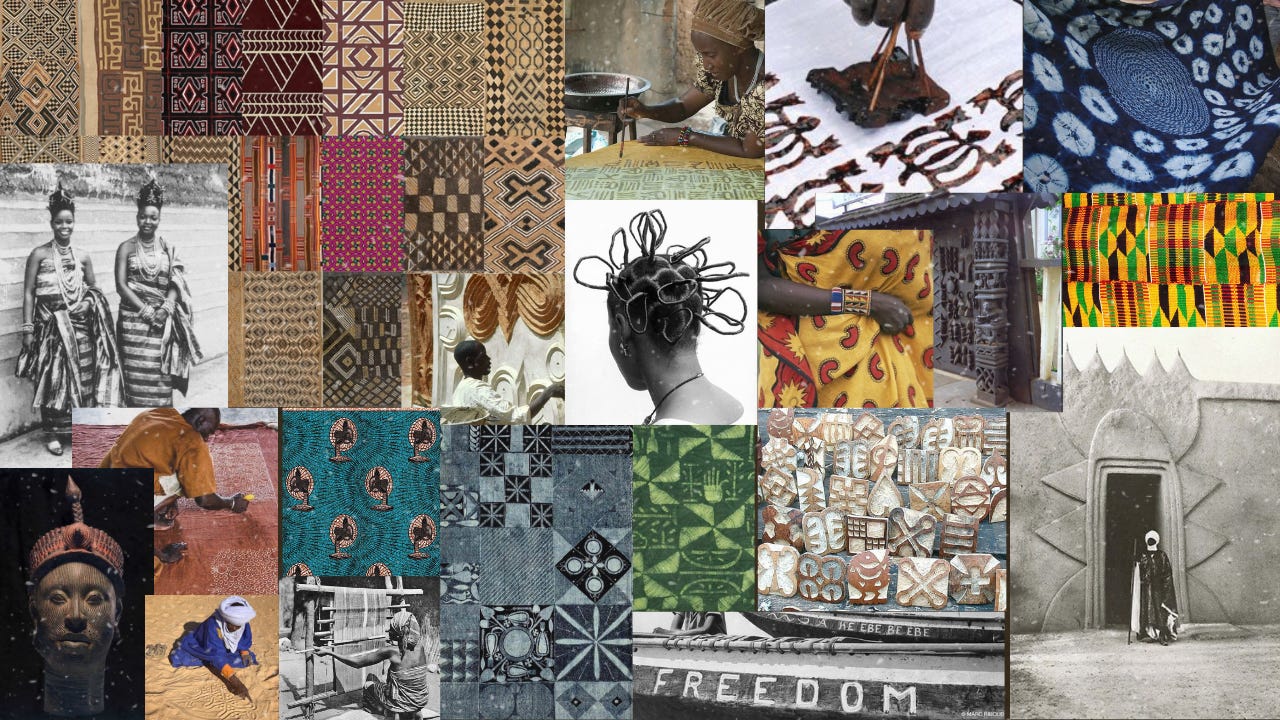
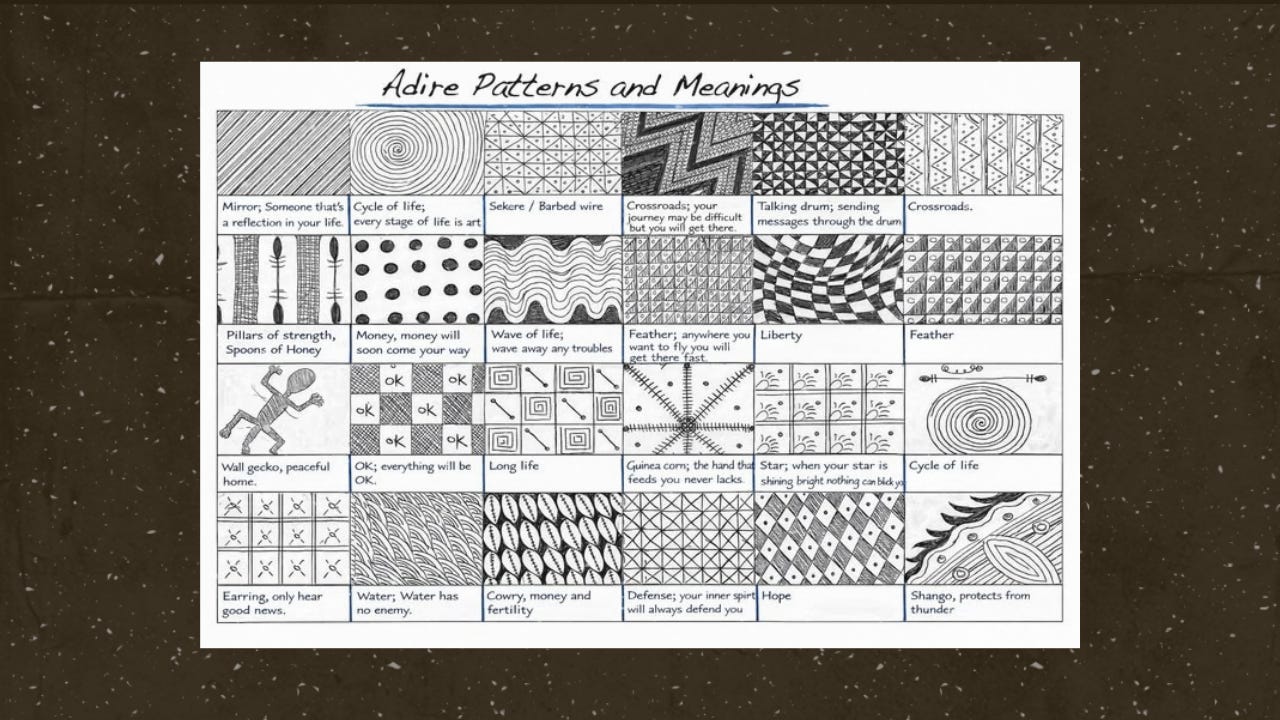
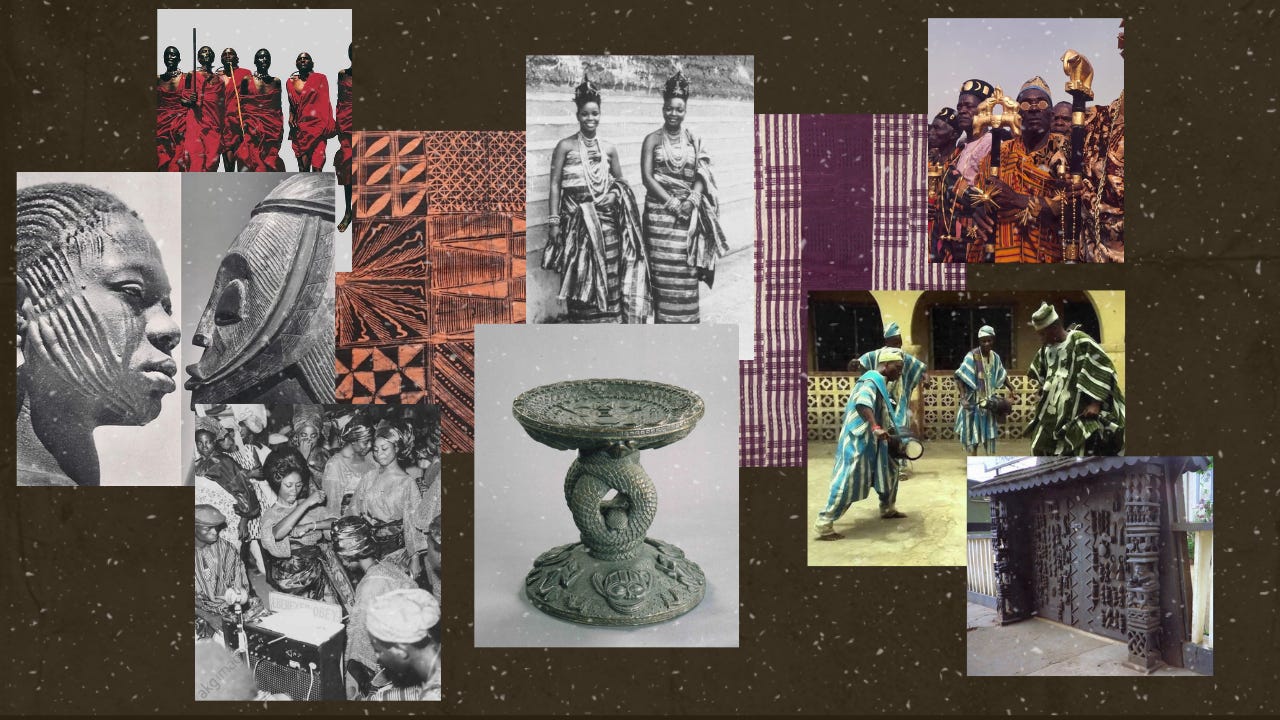
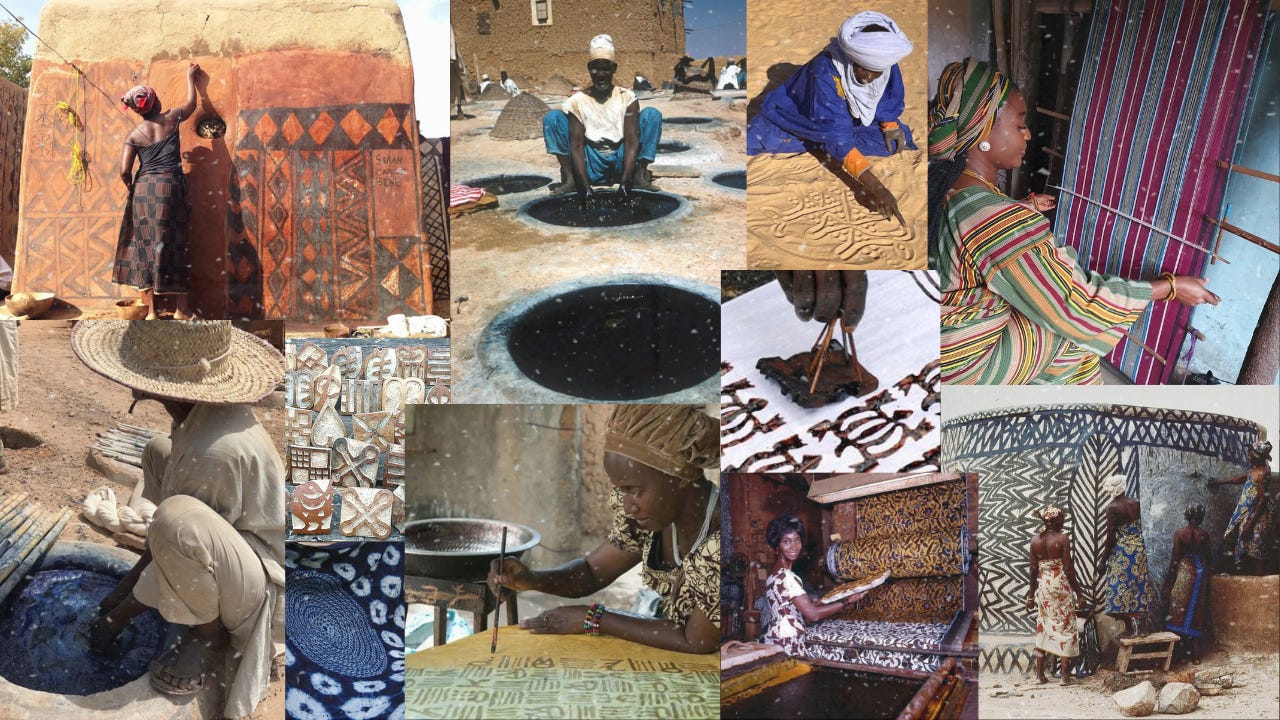
In June 2025, an Adire exhibition was held on Victoria Island, Lagos. I was lucky to attend this four-day event and see so many beautiful tie-dye styles. I took my time going from stall to stall, admiring each fabric I encountered. There was a section dedicated to Adire patterns, and until that point, it had never crossed my mind that the motifs on these indigo fabrics carried meaning. That event made me start seeing patterns before colour. What makes fabrics like Adire and Aso-Oke unique isn’t just their texture, but the patterns and the methods used in making them.
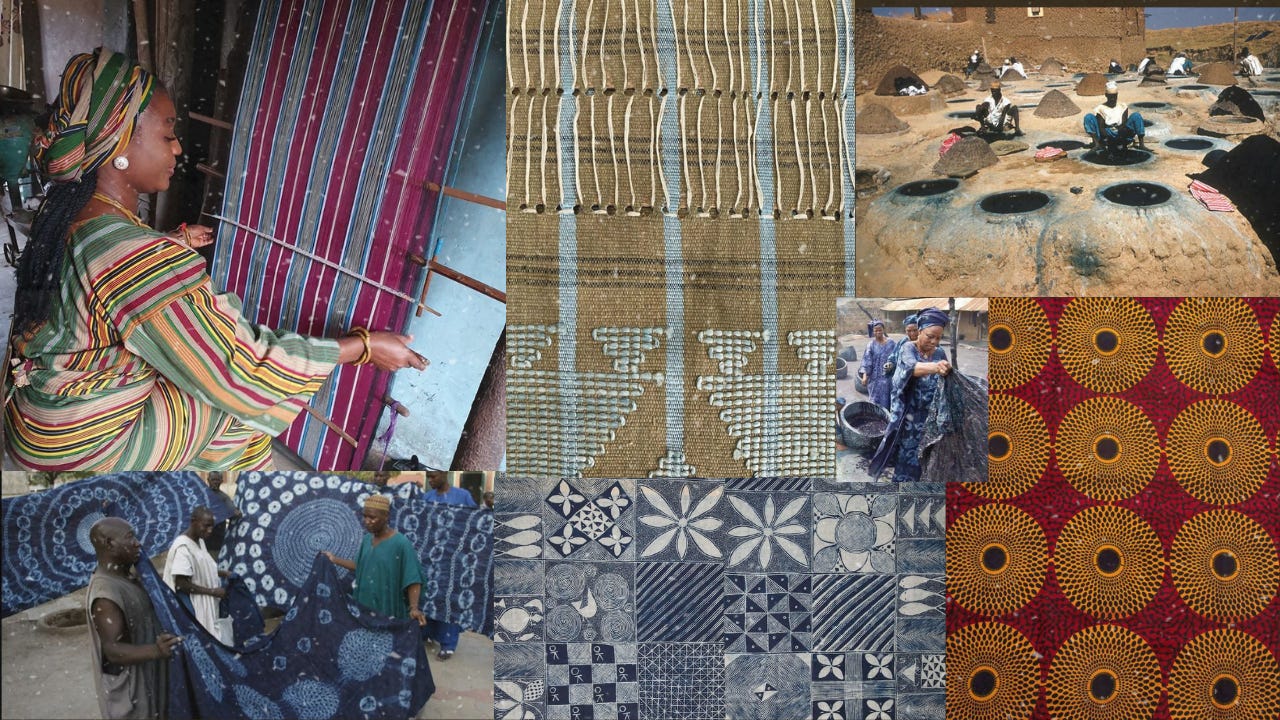
It makes me think of the craze everyone had for Ankara between 2015 and 2018. It was inescapable in Sub-Saharan Africa. From trousers, shoes, shirts, bags and hand fans—you name it—Ankara had made a name for itself there. And yet again, I find myself admiring the patterns of Ankara.
I started reading books by Chimamanda Adichie and got my hands on four of her books from ‘The Narrative Landscape’ publishing house, which used Ankara Vilisco prints as the covers. My favourite is the one used in Half of a Yellow Sun. Before I could open the book, I stared for a while at the red stars scattered across the yellow background. I had that exact Ankara design when I was much younger.

I recently bought a short Agbada-styled dress featuring Yoruba motifs: it showed the Shekere, Talking Drum, Money, and symbols of Defence. I was surprised that the patterns on my dress had a story to tell.
My newfound interest in patterns didn’t stop there. I recently went to Ghana, and one of my main goals was to get my hands on Kente fabrics, which I succeeded in doing so. Each colour and stroke meant something significant.
African patterns aren’t just found in clothes, but in homes, murals, weapons, tools, furniture and artefacts. However, to avoid yapping too much, I will focus on those found on fabrics.
The Shweshwe of South Africa, the Alindi of Somalia, the Bogolan of Mali and the Ukupuru of Nigeria show that, no matter the country or ethnic group, these patterns are distinctively African.
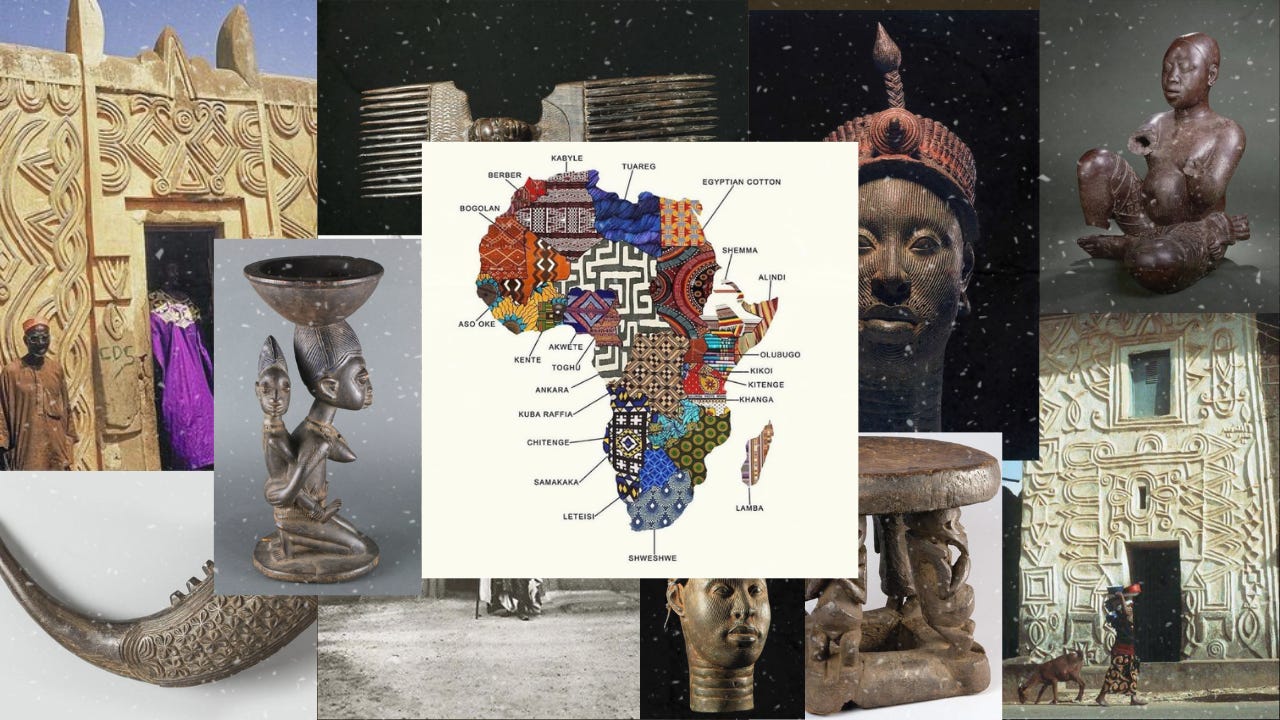
Strokes, horizontal or vertical, are woven, interlaced and webbed together to form meaning. Meaning is embedded in repetition. Aside from the patterns in our clothes, what else comes to mind when we think of patterns? My guess is… people. If patterns carry meaning, what meaning do our repeated behaviours carry?
Habits – customs – propensity. They become “second nature”.
A habit is born because of repetition.
We are all foreign to everything and everyone at first. However, continuously encountering something foreign eventually becomes familiar—familiarity with people, language, objects, activities and systems.
As I noticed the motifs in African textiles, I began to recognise a similar systematic pattern in Africa today.
Greed, self-sabotage, external validation, tribalism, leadership recycling—the list goes on—are some of the many systemic problems at play in Africa today. And, to be honest, tying it all down to one thing is challenging because it’s not a single “root” problem but a chain. One issue leads to another, and every chain must have an anchor; if not, where did it begin?
In searching for the anchor of this sickening pattern that dwells on the African continent, the only word I could think of was ‘greed’. One could easily conclude that, but if I settled on greed, then I’d be biased, because it’s not an “African” thing but a human trait—one we are not taught but are born with. We have all shown signs of greed, no matter how small.
So, after deep pondering, I arrived at…
COMFORT
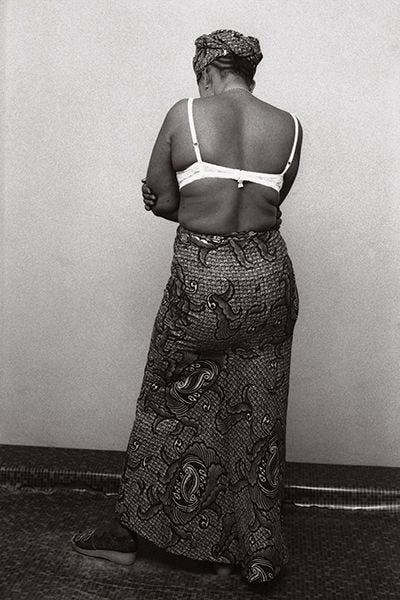
Africans, including me, are too comfortable. Comfortable with where we are, nationally, economically, socially and politically.
When you want to point fingers at who is to blame for this comfort we have, the first thought is the people in power. And to that I say no because those ‘politicians’ are still people (citizens) like you and me.
Comfort begins with the people, for what is a nation without its people? Who is a ‘leader’ without followers? Say all the higher-ups, get rid of everyone? Who will they govern? Themselves? That sounds boring. If you give the same presidential position to those who complain about the current state of the economy, would they act any differently? The answer is most likely no. They would follow in their predecessors’ footsteps.
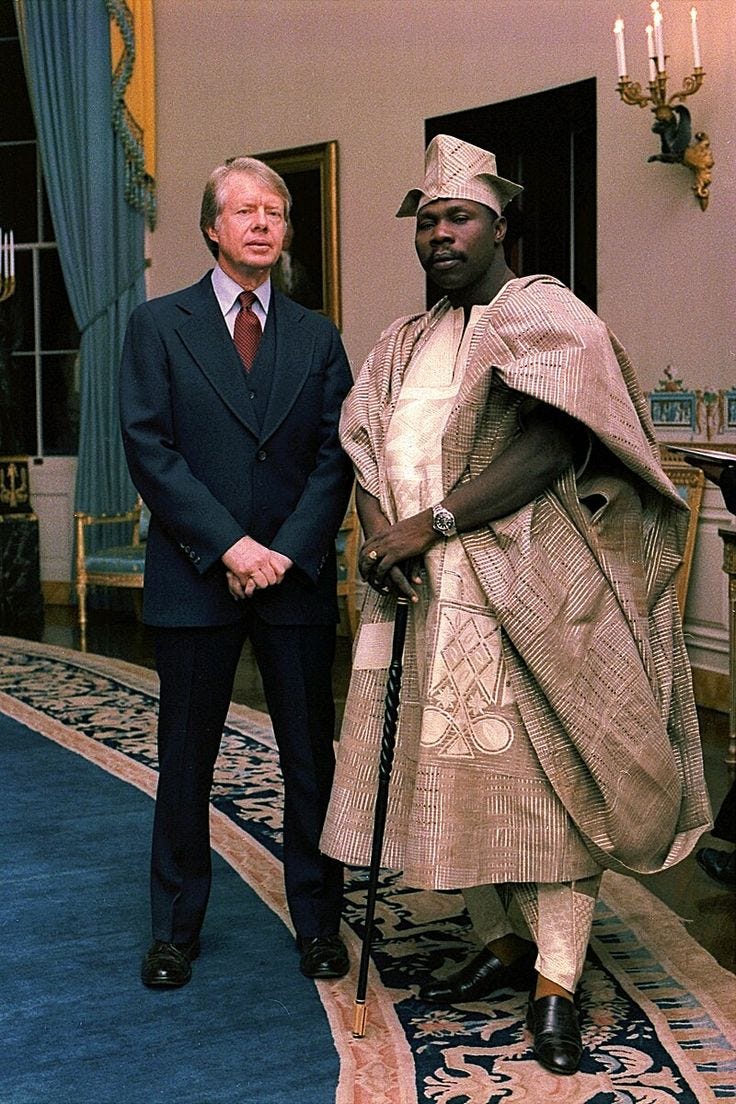
Collective comfort leads to normalised dysfunction.
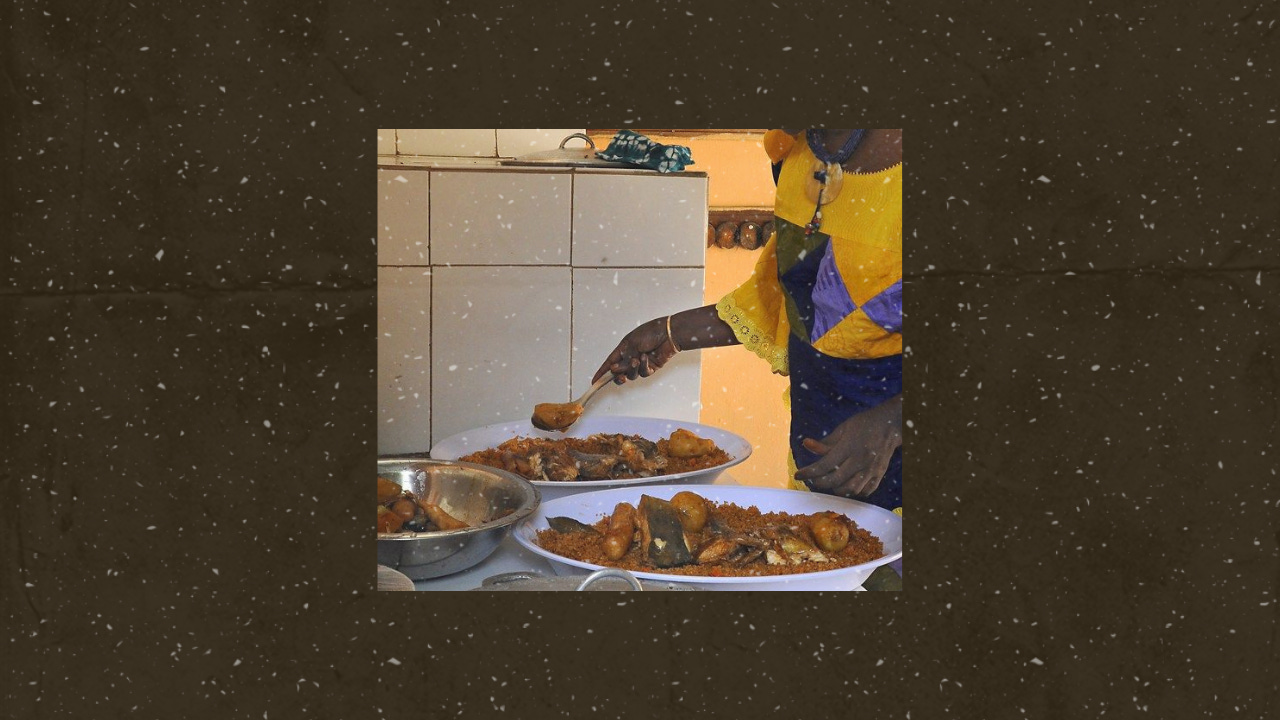
It is lunch hour at a ‘Mama Put’ restaurant in Nigeria. Men and women, working for their daily bread, gather to replenish their strength for the remaining hours of the day. The news is playing on the hung television, and a breaking news just came in. “Breaking news: At least 30 people dead in ‘bandit’ attack”. Sub-line reads: ‘Several other people, including children, were kidnapped by “bandits” in Niger State’. A few glance at the headline, many continue to order and eat their meal, but two briefly discuss the ongoing insecurities in Nigeria. And this conversation ends in “Na so e go be”, which means, from pidgin English, “That is how it will (continue) to be”, an acceptance in the current situation of the country.
News like this? A national norm.
Because it is normal for the average person to hear that bandits have massacred another village, it is normal not to have public health care. It is normal to hear national budgets go ‘missing’. It is normal not to have had any education beyond the primary level. It is normal for children to hawk on the streets. It is normal not to have stable electricity. It is expected to rig elections. It is normal for a country to export its raw materials and import them back as refined materials, because making our own would be too ‘costly’ to do. It is normal for children to be sold into ‘marriages’. It is normal for children to work to the bone, supplying ore for foreign companies without any awareness or consequences.
As a result of this comfort, our repeated choices weave the social fabric we live in.
How can someone be comfortable in their suffering, you may think? If suffering is all you know and a chance for liberation is at the cost of more adversity, you may stay right where you are and ‘hope for better days to come naturally’.
When you are too busy working to survive and not live, starting a resolution is the last thing on your mind.
So, how many tomorrows can we hope to be better? Why can’t the better days start today? Why were the better days not yesterday? If we want to be better, then we have to get uncomfortable.
DISCOMFORT
Discomfort is annoying. It is an unpleasant change in your current situation, and no one likes it. To expel that discomfort is not to revert to old ways and “cope,” but to find solutions ensuring that discomfort never arises again.
Change can be a beautiful but ugly process.
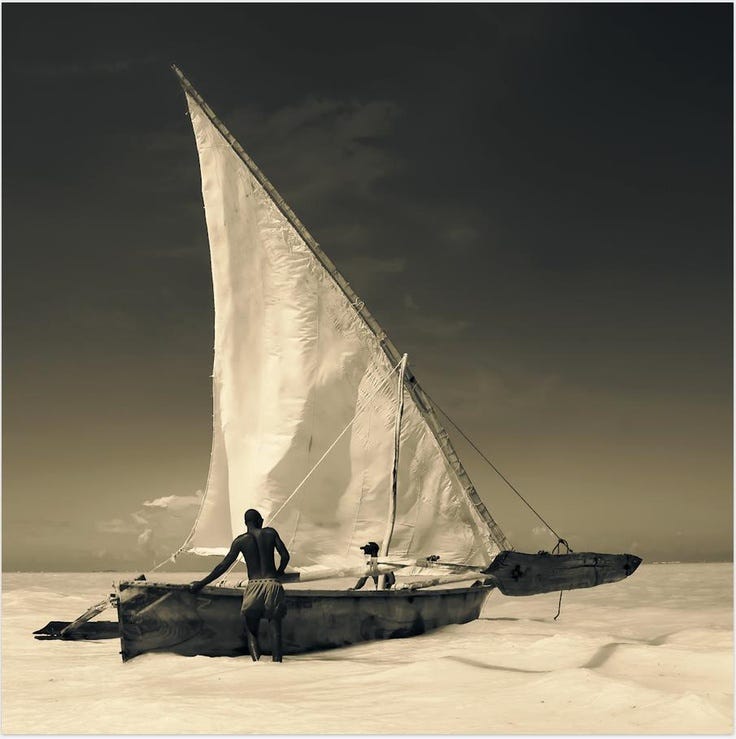
Mountains formed by tectonic plate collisions are the result of a violent process, yet they produce a beautiful outcome. If civilisations were situated on or near those plates, they would experience earthquakes, fear, and destruction… yet here we are today, admiring the Himalayas or Mount Kilimanjaro.
Transformation feels like chaos while it’s happening.
Although I yearn for transformation in the African continent, I do not hope it is done through chaos. Africa has shed too much blood for a smidgen of ‘peace’ we have today. Africa does not need revolts, but resolutions. Concrete resolve and resolution – that is our liberation.
The discomfort in change is not from the furore but from the societal rewiring.
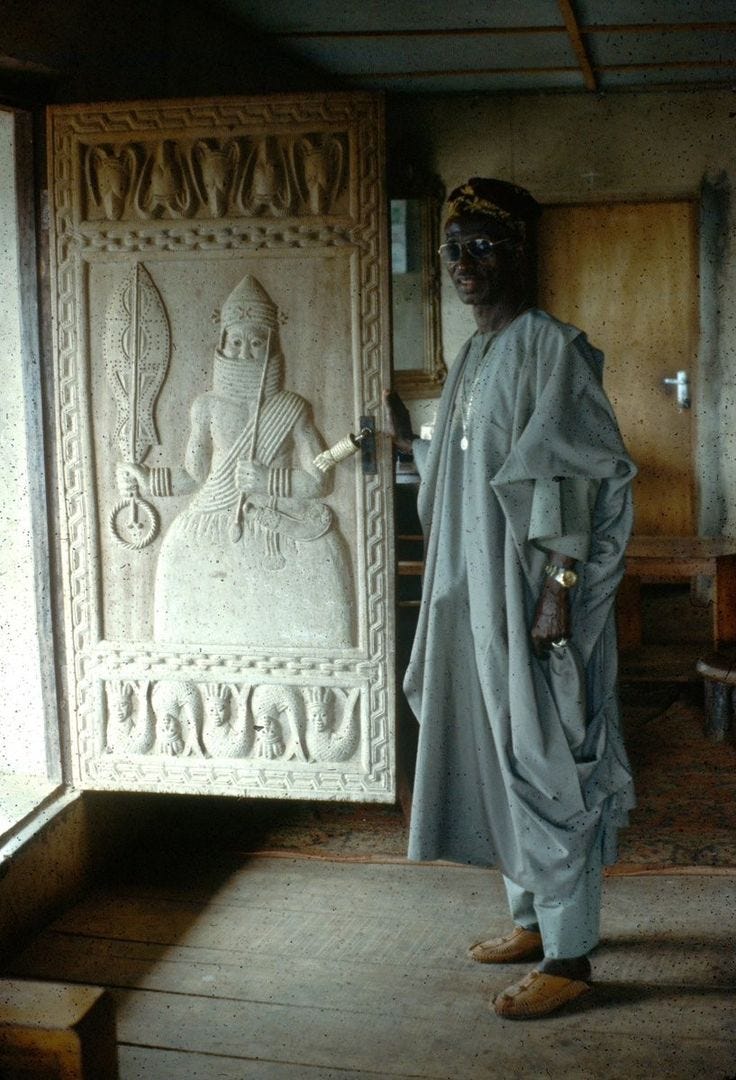
Before we can have systemic change, we must have individual responsibility: the ability to recognise the pattern and break it every day, no matter how small – in other words, decolonising the African mind.
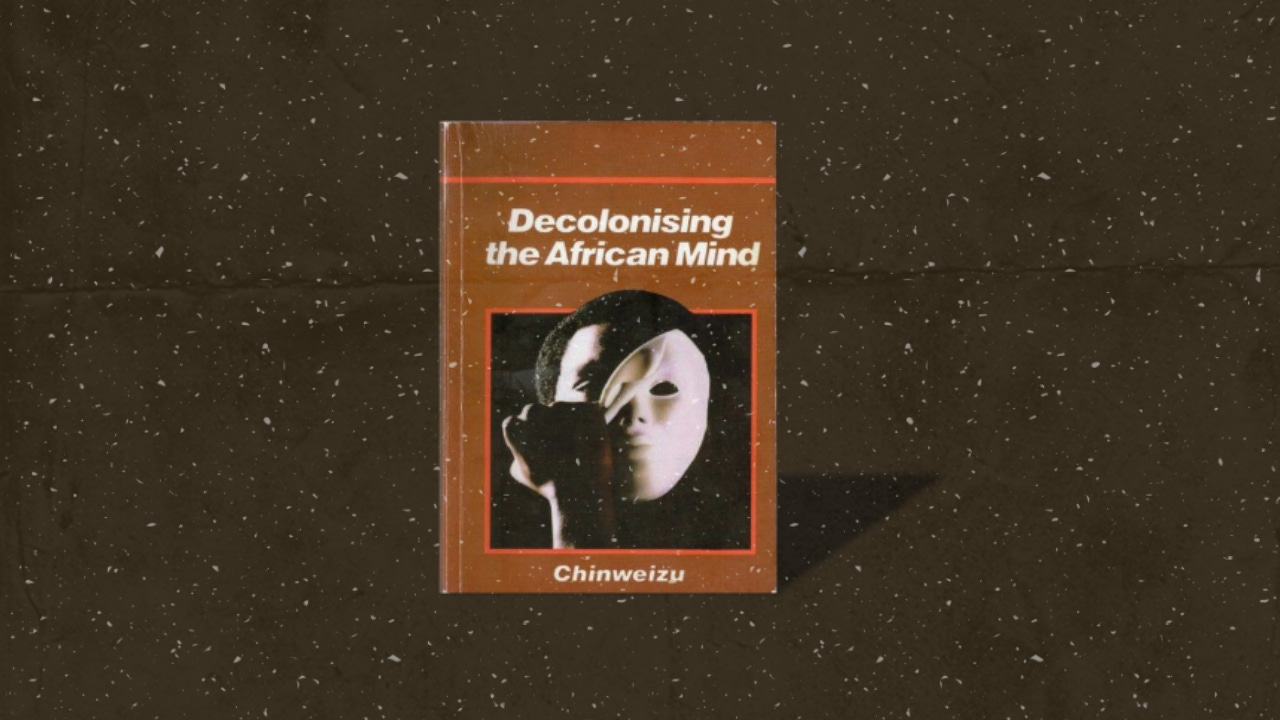
“Decolonising The African Mind” by Chinweizu Ibekwe highlights that: “The strategic aim of decolonising the African mind is the overthrow of the authority which alien traditions – Arab and European in particular – exercise over Africans. Until that is done, Africans will not regain the autonomous cultural initiative (destroyed in the course of 13 centuries by Arab and European invaders) needed for a renaissance of African civilisation in industrial mode.”
Do you know how unsettling it is to unlearn the way you think and interact with the outside world?
Decolonising the African mind is telling yourself and younger generations that the rivers, waterfalls, and roads are named after foreign people who “discovered” these landforms, and not your ancestors who had been situated there centuries before. Decolonising the African mind is planning your wedding and leaving out a “white” wedding when your traditional wedding is the only one you need. Decolonising the African mind is about naturally feeling inferior to any race that has lighter melanin and less curly hair than you.
It is generations of grooming the mind to believe that, because of the dark shade of your skin, the kinky texture of your hair and your place of origin, you are ultimately a second-class world citizen. And before we deconstruct colonised systemic norms, it is not easy to decolonise societal ones every day. I sometimes find myself falling into the narrative. Change is truly an uncomfortable process.
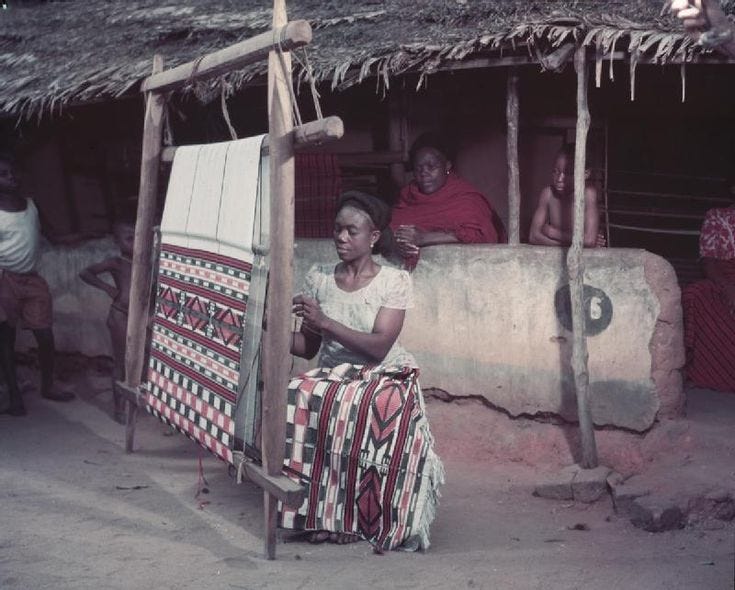
The oil, lithium, palm oil, gold, natural gas, industrial diamonds, coffee, cotton, cobalt, copper and graphite are some of the many resources African countries export to the world. “Exports” – more like overexploitation. So why don’t Africans start using their resources better for themselves?
The moment Africa breaks the pattern, what do you think would happen? Do you think most countries in the world would allow African countries to limit their exports scot-free? Do you know the amount of ‘money’ puppet leaders in Africa would lose if they let this happen? It would be intolerable for them.
Though uncomfortable, the hope for change seems more like a dream than a vision. It is like thinking of a colour for the future that doesn’t exist.
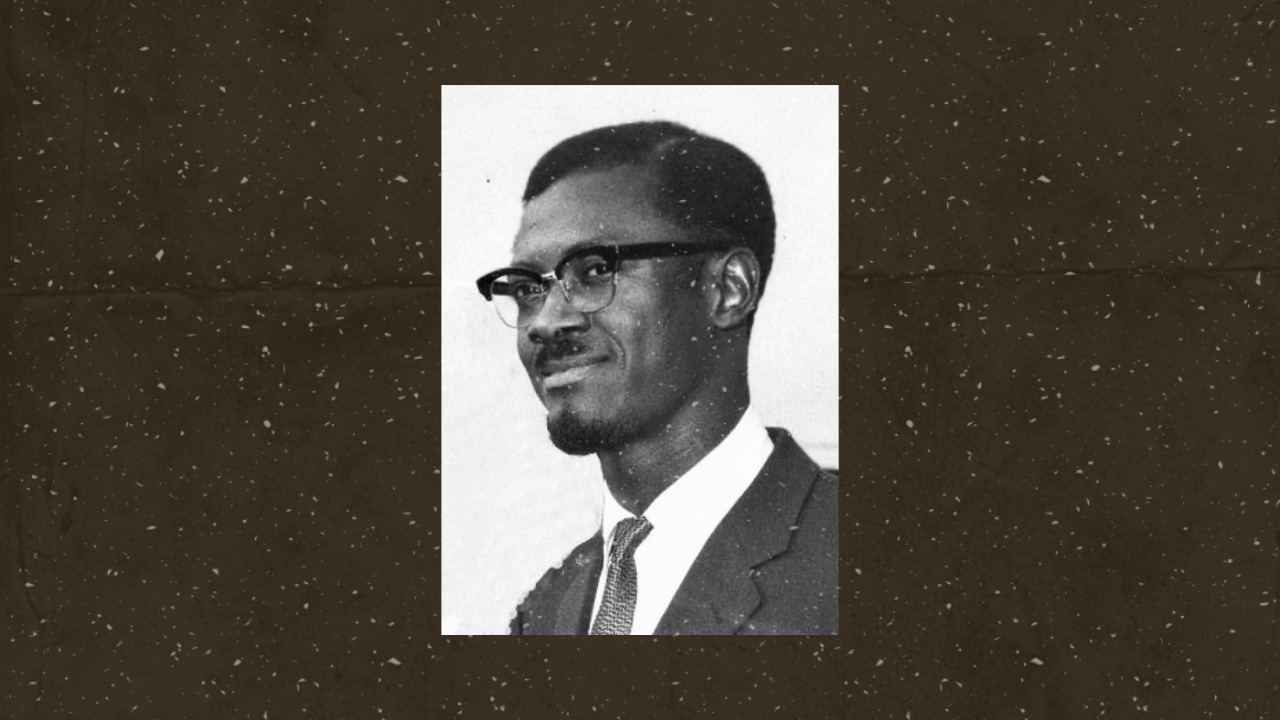
FOR TODAY, TOMORROW, AND FOREVER
There are so many systems to reprogram, undo, and fix that I cannot remember or fit them all into this piece.
The rise to stability in Africa is a slow but liberating process. We must remember that the average African country is only about 60 years post-independence and, before that, most were under colonial rule. So many countries have done more wrongs than rights. Countries like Nigeria have experienced civil wars, which are almost inescapable when you were originally a land of individual empires and have been boxed in by imaginary borders called countries. (Berlin Conference of 1884)
Tribes and ethnic groups have been, and still are, in conflict with one another— wanting more people from their regions to be elected, blaming an entire ethnic group if a leader does not perform to their expectations. In simple words, it is tribalism. How can we expect a continent to work together when it cannot untangle and address its internal problems?
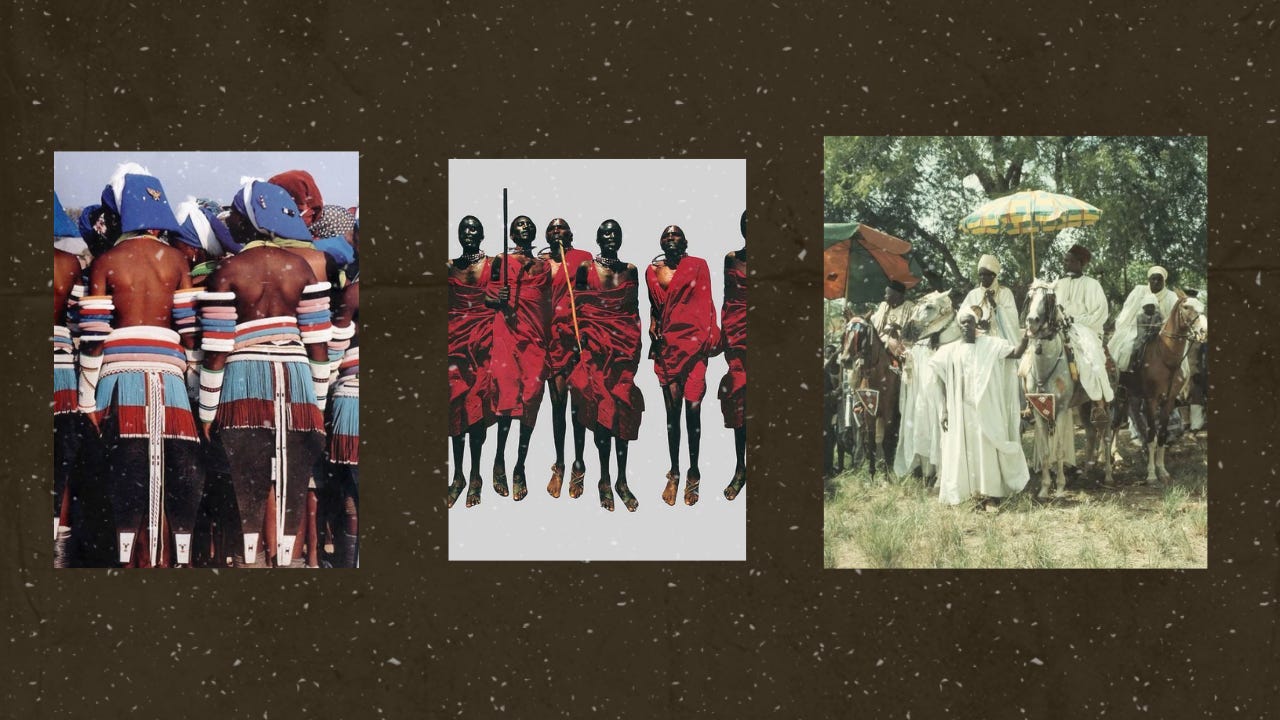
As I mentioned, numerous patterns are keeping Africa in the societal fabric it wears today. Any strand that tries to deviate from it is quickly re-woven back into place. To unweave these patterns could take years or even decades. But one step at a time leads to the finish line. And the first step is a voice — not the voice of one person, but the cry and agony of many, so loud that it cannot be ignored. A boiling need for change so hot it reaches the coldest parts of the Earth. A problem so urgent that it is visible even to the blind.
Unfortunately, the person, people, or generation that will do this may not even be born yet. So why am I voicing it? Why write any of this if I have no real power to make that change? What more can a voice do if the feet cannot move? Honestly, I do not know the answer to that. But what I do know is that we should not underestimate delayed impact.
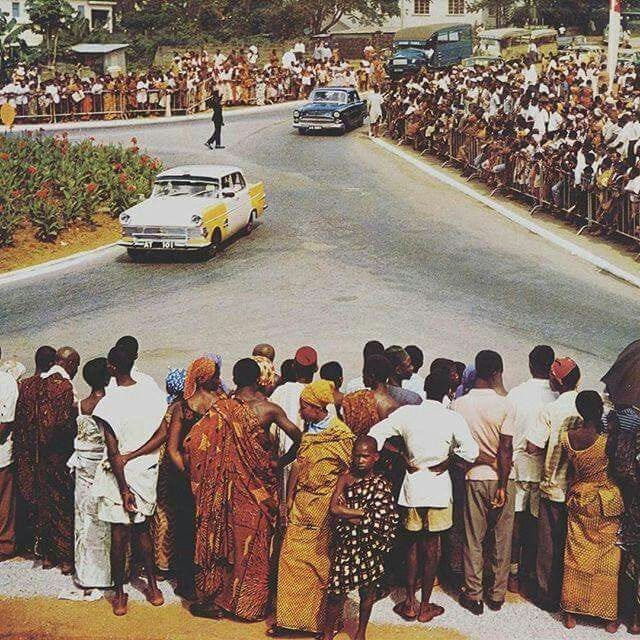
Every day, we should voice our problems. Teach younger generations that there is no good in hoarding wealth and power. Rebel against normalised dysfunction, because others will notice and follow. Call out the bullshit treatment and point out the cowards and frauds.
We must break the pattern every day because we are capable of better. We shall not settle for less because a small group of people in chambers said so.
Change begins with a single, clean new stroke, for another will overlap it to weave better patterns. We should start today, because we would have hoped our predecessors did the same for us.
African patterns — why can’t we make a new one?
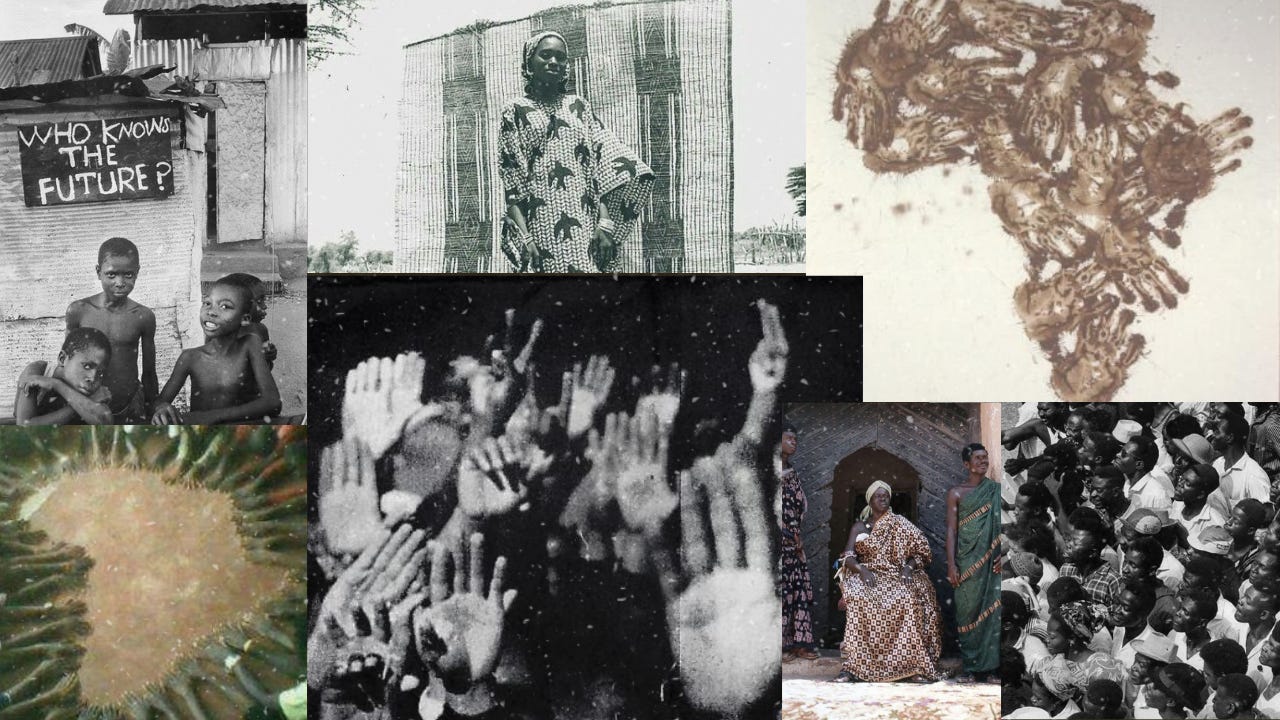
Worth Having —
[NEXT BLOG: Ways to Keep The Skin Moisturised]
⚠️ All image credits go to the original owners. I do not claim ownership of the images used in this blog. If you are the original creator and would like it removed, please feel free to contact me directly.
🎨 PICTURES: From Pinterest. Images and collages used in this blog would be posted on my Pinterest.
Glossary:
Adire - a type of fabric produced mainly in south-western Nigeria, featuring patterns obtained by applying indigo or other dyes using various resist-dyeing techniques.
Aṣọ òkè - known originally as Òfì, is a hand-woven cloth that originated from the Yoruba people of Yorubaland within today's Nigeria, Benin and Togo.
Ankara - a type of cotton cloth featuring brightly coloured patterns produced by means of a wax-resist dye technique, associated especially with West African fashion.
‘Up Africanity’ Tags:

{Bloggers Last Ink}
While writing this ‘think piece’, I felt very uncomfortable. Not uncomfortable because of my inability to change the state of my continent, but in thinking. This took me a week to finish, with so much thinking that my head hurt. I can confidently say that this piece has made me reach a new height in writing and is by far my most favourite.
I worried that as I poured every bit of my critical thinking into this, that it wouldn’t get recognised as I hope for, but that’s not the point of writing. It’s never for the clicks or the recognition, it’s for yourself. Satisfaction, that you had a thought, an idea and put it down into words. The eyes that would get to know about this will not see it today, next month, in ten years or even never. But that is fine because I have made a point to myself.
Thank you again to anyone who read to the end!!
{SEÉŃI’s Digital Salon}
Find Seéńi on other social media platforms: Pinterest, Tiktok and Instagram.
Pinterest boards you may find interesting: Echoes of Wisdom - quotes, Frames of Seéńi - images used in my blogs, La Muse Éternelle - muses of Seéńi and Pensée Chroniques - monthly journal prompts.
